If you’ve been waiting for the “right time” to start using video, the bad news is: the right time was three years ago. The good news is you can start now.
Video isn’t a marketing tactic anymore. It’s no longer “nice-to-have” content when you get around to it. In 2026, video is the baseline language of trust online. And if you’re not using it, you’re not just missing out: you’re becoming invisible.
Let’s talk about what’s actually happening in the market right now, according to Wyzowl’s State of Video Marketing 2026 Report
Will Businesses Use Video? They Already Are
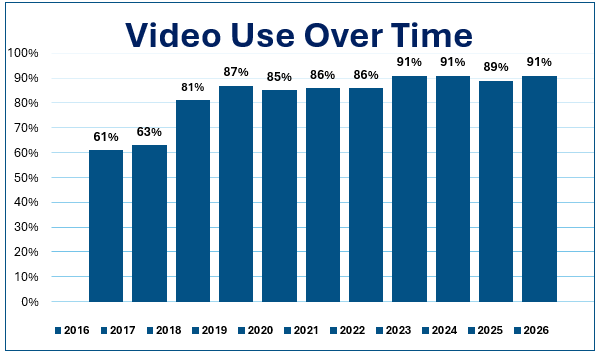
Read that again. Ninety-one percent.
That means if you’re not using video, you’re way past being a bit behind. And your potential clients notice.
When someone lands on your LinkedIn profile, your Substack account, or your website and doesn’t see any video? They notice. Not because video is cool or impressive today. Because it’s expected.
The same way a website became non-negotiable in 2010, video became non-negotiable in 2024. By 2026, we’re past the adoption curve. We’re in the “this is just how business works now” phase.
Video Isn’t An Optional Marketing Strategy
93% of video marketers say video is an important or essential part of their overall marketing strategy.
That’s not “we’re trying it out.” That’s “we can’t run our marketing without it.”
If you’re a consultant, entrepreneur, or small business owner this stat should hit hard. Your competitors aren’t experimenting with video. They’re building video creation systems. They’re batching video content. They’re repurposing clips. They’re showing up consistently in the places where your ideal clients spend time.
And if you’re still writing long LinkedIn posts with no face attached? And that doesn’t mean a post with a “selfie,” you’re working twice as hard for half the impact.
Social Video Is Your Entry
When people hear “video marketing,” they still picture big production budgets, studios, and perfectly scripted brand films.
That’s not what’s happening. Or what consumers want to see.
69% of video marketers have created social media videos. Short, simple, social-first clips are now the norm: not the exception.
This is actually great news if you’re still a bit uncomfortable on camera overwhelmed by the idea of “doing video.”
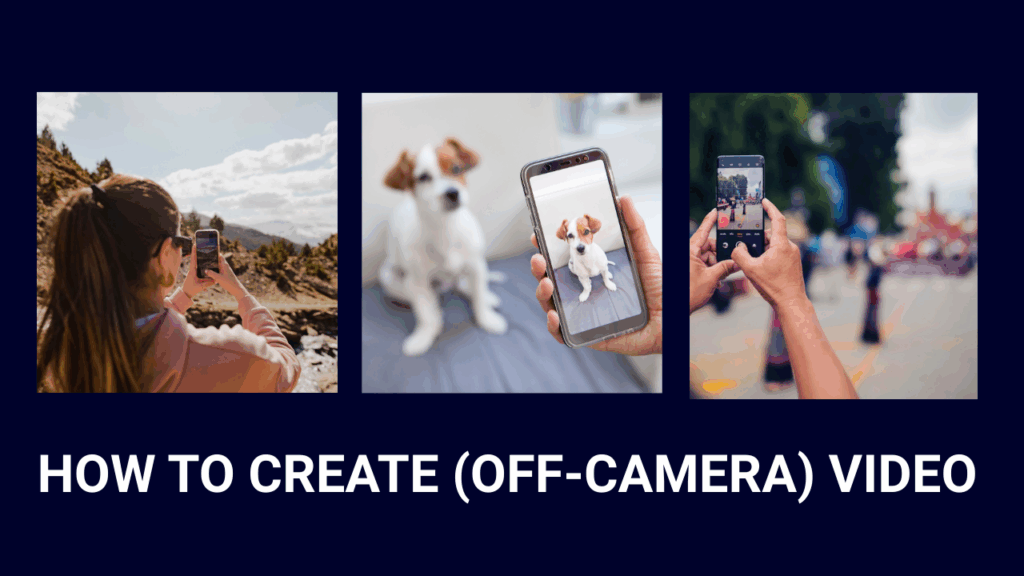
You don’t need a production team. You don’t need expensive equipment. You need your phone, a quiet corner, and something helpful to say.
Social video works because it’s designed to be:
• Short (30–90 seconds)
• Direct (one idea, clearly stated)
• Conversational (like you’re talking to a friend, not performing for an audience)
If you’ve been stuck because you think video has to be polished, now is the time to let that go. The only tool I recommend, besides your phone, is an inexpensive wireless lavalier.
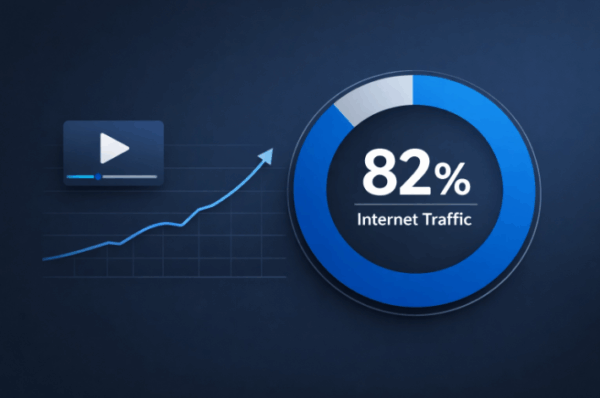
82% of marketers say video has helped increase web traffic (Wyzowl 2026)
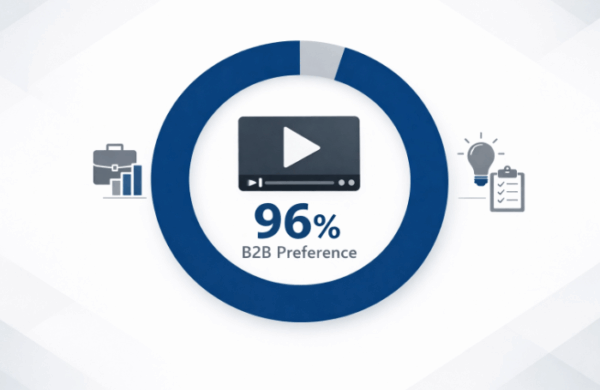
96% of people have watched an explainer video to learn more about a product or service (Wyzowl 2026).
Even Late Adopters Are Finally Moving
Here’s the stat that should light a fire: 67% of marketers who don’t currently use video say they plan to start using it in 2026.
Translation: waiting is no longer an option. It’s rapidly increasing the gap between you and everyone else.
If two-thirds of the people who aren’t using video are about to start, that tells you a lot about where the industry is headed. The time to start isn’t “when you’re ready,” it’s NOW.
What Format Should You Use?
Let’s get practical. What are people actually making?
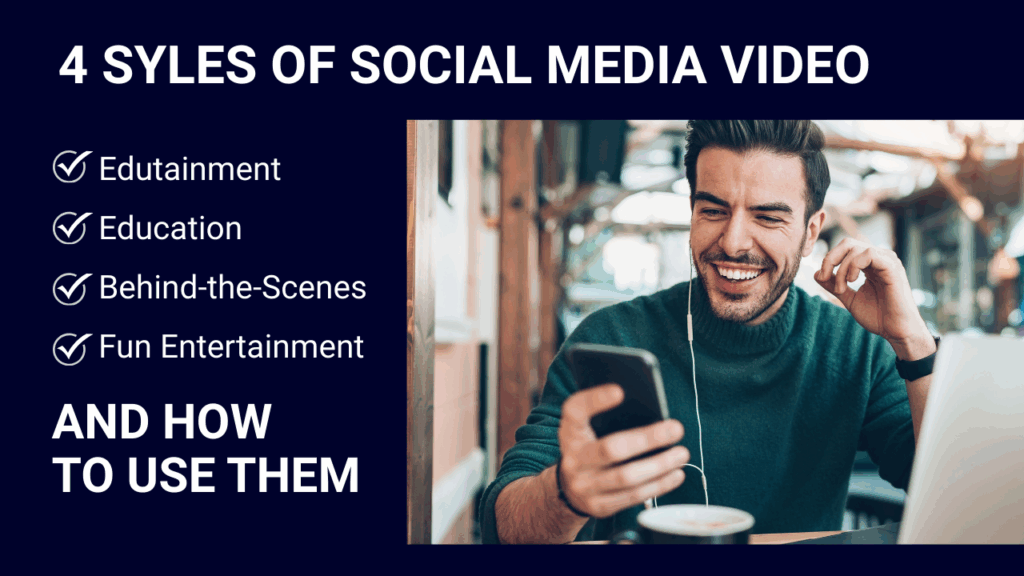
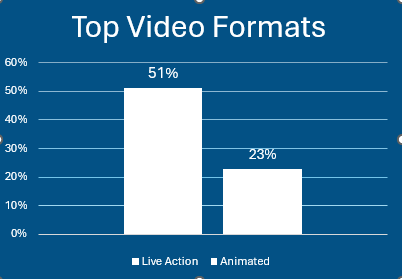
The two most popular video formats/styles in 2026 are:
• Live action (51%) – a real person on camera
• Animated (23%) – motion graphics, text on screen, illustrations
If you hate being on camera, remember the only thing viewers care about is if your message is relevant to them. Nobody cares what you look or sound like. And nobody’s expecting a Hollywood-level production either.
→ A talking-head style video can be you answering one question
→ An overlay technique with you minimized in the corner
→ A screen-recorded video with you doing a voiceover
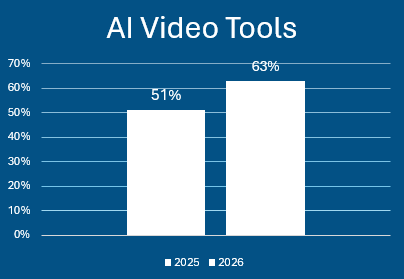
And if you’re truly not ready to be on camera yet? Animated videos and templates are an easy on-ramp. Tools like Canva, CapCut, even AI video generators like Sora let you create helpful, clear videos without ever showing your face.
Where is AI In All of This?
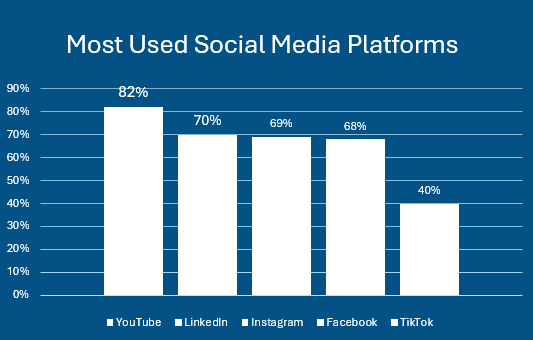
Social Media Platforms Businesses Are Using
When it comes to video marketing, it’s not surprising that YouTube (82%) is the top choice for video marketers. LinkedIn®️comes in second (70%). Followed by Instagram (69%), Facebook (66%), and TikTok (40%).
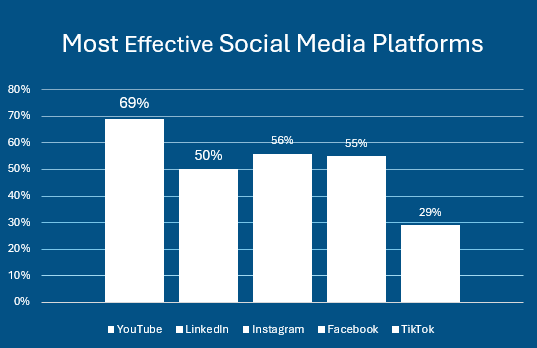
When it comes to the most effective, marketers say YouTube is the most effective (69%). Followed by Instagram (56%), Facebook (55%), and LinkedIn (50%). And TikTok last (29%).
Camera Shy? Start Here
If you’re stuck on what to post, start with these 3 videos:
The 3-Video Starter Pack
- The “Here’s who I help” video (30–60 seconds)
→ Who you work with, what problem you solve, what changes after they work with you.
- The “Common mistake” video (30–60 seconds)
→ One thing your ideal client gets wrong or wastes time on.
- The “What to do instead” video (45–90 seconds)
→ Your better approach, explained simply.
That’s it. Three videos. You can record all three in one sitting and post them over the next few weeks. Repurpose the same videos across social platforms, including LinkedIn, as well as on your website.
Each one builds trust. Each one can help position you as a guide. And none of them require you to dance on video.
You’re not trying to entertain. You’re trying to help people understand what you do and why it matters to them.
Why Video Matters for Trust
Video isn’t just a format. It’s the fastest way to build that know, like, and trust factor.
When someone sees you on video, they:
• Hear your tone and cadence
• See your facial expressions and energy
• Get a sense of whether you “get” their problem
Text can do some of that. But video does it more effectively.
That’s why 85% of consumers say they’ve been convinced to buy a product or service by watching a video. Video builds familiarity. Familiarity builds trust. Trust shortens sales cycles.
For consultants and service providers, this is everything. You’re not selling widgets. You’re selling expertise, perspective, and the belief that you can help someone get unstuck.
Video is how you show that: not just tell it.
The Bottom Line
Video in 2026 isn’t about being the most creative or the most visible. It’s about being findable, understandable, and trustworthy.
If you’ve been avoiding it because you think you need to be perfect, polished, or “good on camera,” here’s the truth: your audience doesn’t need perfect. They need clear messaging.
They need to know who you are, what you do, and whether you can help them. Video is the fastest, most effective way to show them that.
Truth is, the longer you wait to get started, the harder it gets. Not because the tools get more complicated, but because the gap between you and everyone else keeps growing.
Start with one video this week. Record it on your phone. Answer one real question. Post it somewhere your ideal clients hang out.
⁉️ Need help developing short-form video content?
Learn about 1:1 Video Coaching and Support – Click Here
Explore training for your team – Click Here