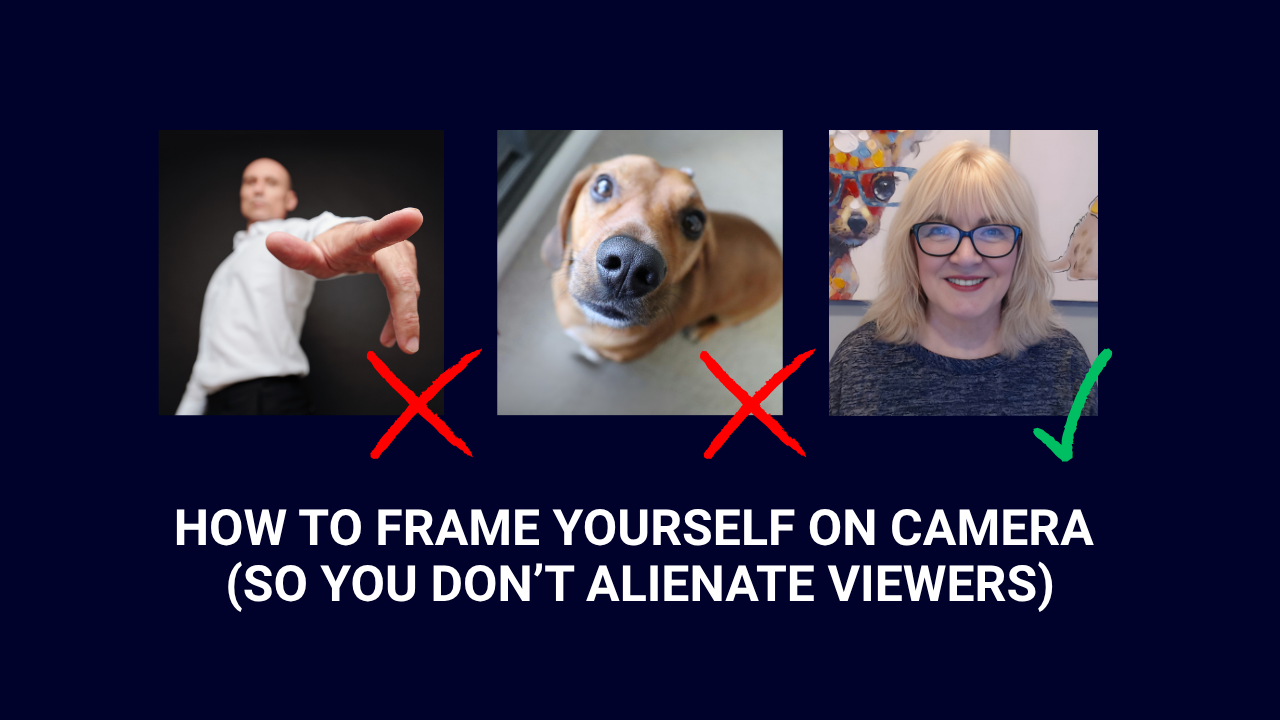
Bad camera angles don’t just make you look awkward. They can make your audience feel awkward, too.
If your camera is too high, you look distant. Too low, and you’re literally talking down to people.
Good framing isn’t about vanity — it’s about trust and connection. And the good news? It doesn’t take fancy gear to fix.
It’s just about planning. Let’s dive in.
Think Connection
Sometimes my media studies and psych background overlap; this is one of them. Because the way you frame yourself on camera taps into how people subconsciously read comfort, trust, and connection.
For LinkedIn, TikTok, Instagram Reels, or YouTube Shorts — your camera should be at eye level.
→ This makes you look natural and trustworthy in the feed.
→ Too low = double chin effect.
→ Too high = you look smaller and less confident.
💡 Quick fix: Stack your laptop on books, or adjust your tripod until the lens meets your eyes.
Frame Yourself For The Feed
Whether you realize it or not, how you frame your face in the feed can either welcome or repel people watching your video.
Head to Mid-Chest
Leave about a side-hand width of space above your head. The bottom around mid-chest level (best for showing natural gestures).
Camera about an arm’s length (18–24 inches) away. Feels personal, not cramped or distant.

Head and Shoulders
Head and shoulders framing also works close enough to connect, but not so tight it feels like you’re “in someone’s face.”
Camera still about arm’s length (18–24 inches) away.

Face Only
On social video, closeness = connection. But don’t overdo it.
→ Stay about arm’s length from the lens.
→ Too close feels like you’re invading someone’s space in their feed.

Going Forward
The next time you get ready to record, make sure to check the camera angle. What you’re looking for is:
→ Not too close
→ Not too far
→ Head + Shoulders = Just right