LinkedIn®️ Content and Engagement Strategies for Teams

Your team is on LinkedIn. But are they using it?

Most professionals have a LinkedIn profile. Far fewer are using it in a way that actually builds relationships, creates visibility, or supports business development.

That’s not a motivation problem. It’s a strategy problem.

Without a clear approach to content, profiles, and engagement, even the most well-intentioned team members end up doing one of three things: posting randomly and inconsistently, going silent altogether, or worse — connecting with potential clients and immediately pitching their services.

That last one has a name. It’s called the pitch-slap. And it’s one of the fastest ways to damage a relationship before it starts.

This training gives your team a better way.

What This Training Covers

1. LinkedIn Profile Optimization — Your Digital Handshake

Before your team can build relationships, they need to show up credibly. A well-optimized profile is the foundation everything else builds on.

Your team will learn the essentials:

→ A professional photo — you, shoulders up, no group shots
→ A Headline that conveys who you are as well as what you do
→ A Banner that grabs visitor’s attention and sets them apart
→ A personalized LinkedIn URL (banish weird letters and characters)
→ An About section that speaks to clients, not a block of text about credentials
→ A clear call to action aligned with your company’s goals

Your team will walk away knowing exactly what to update and why, with real examples of what a strong profile looks like versus one that’s getting scrolled past.

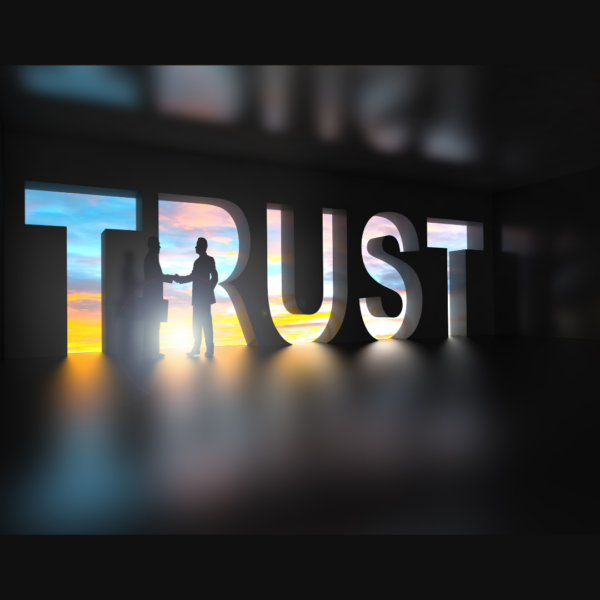
sharing valuable content builds trust

2. Content Strategy — What to Post and Why

Content is how your team builds visibility and authority before a potential client ever reaches out. But random posting doesn’t build authority. Structured, intentional content does.

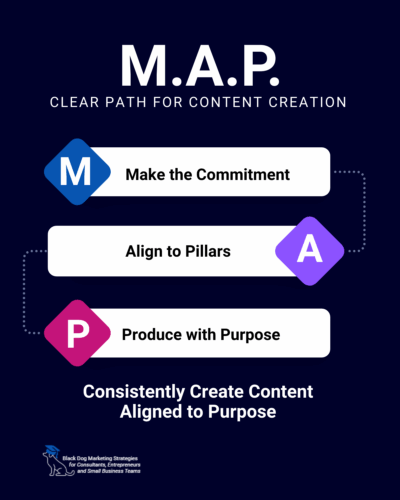
This is where the MAP framework comes in — applied at the team level. MAP gives your team a clear content structure built around the topics your organization wants to be known for. Instead of everyone posting independently with no coherent message, your team becomes a coordinated group of voices reinforcing the same areas of expertise.

Your team will learn:

→ How to identify and anchor content to your organization’s key themes
→  The content formats that perform best on LinkedIn right now:
↳ Video — high engagement, builds trust with potential clients
↳ Carousels — high engagement, ideal for breaking down processes, tips, and insights
↳ Text with images — versatile and consistently effective
→  How to create content that reflects individual expertise — not just company announcements

How to use BOCA (Banish On-Camera Anxiety) principles to get comfortable showing up on video — because video is no longer optional on LinkedIn

This is a high-level overview of what works and why, with real examples of strong-performing content and practical tips on things like optimal video length, carousel slide counts, and post structure. Your team will leave knowing what to focus on, not guessing.

3. Engagement — How to Build Relationships That Lead to Business

This is where most LinkedIn training stops short. Posting content is only half the equation. The other half is showing up in other people’s feeds — strategically and authentically.

Your team will learn a commenting and connection strategy built around one principle: build the relationship before you make the ask.

That means:

→  Identifying and consistently engaging with potential clients’ content before connecting
→  Writing comments that add value — not just “Great post!”
→  Connecting with intention, not volume
→  Nurturing relationships over time so that when the conversation turns to business, it feels natural — not forced

And what your team will not do: connect with someone and immediately send a sales pitch. The pitch-slap is one of the most common — and most damaging — mistakes on LinkedIn. This training teaches a better approach.

This section covers the strategy and mindset behind effective LinkedIn engagement — with real examples and practical tips your team can start applying right away.

How the Training Works

Phase 1 — Goal Setting

Before any training begins, I work directly with your leadership team to define goals — whether that’s brand awareness, lead generation, thought leadership, or all three. We establish content themes and engagement strategies tailored to your organization so the training is relevant from day one.

Phase 2 — Live Workshop (60–90 minutes, virtual or in-person)

A hands-on session covering profile optimization, content strategy using the MAP framework, content formats, and the engagement and commenting approach. Practical, actionable, and built around your team’s real goals.

For teams wanting a deeper dive, an Advanced LinkedIn Strategy Workshop (90–120 minutes) is available, customized to your team’s specific needs.

Phase 3 — Group Coaching Call

Four to six weeks after the workshop, we reconvene to review what your team has been doing, look at what’s working, and refine the approach so momentum continues.

What Your Team Walks Away With

In addition to a clearer strategy and real confidence using LinkedIn, every participant walks away with the tools to keep building, as a professional and as part of a stronger, more visible team. That includes:

→  PDF slide decks from session(s)
→ Guides and templates they can use immediately
→  A 30-day content calendar — a ready-to-use tool they complete individually or as a team to build their own personalized content plan

Why LinkedIn — Why Now

LinkedIn is the top platform for B2B visibility and relationship-building. According to HubSpot’s 2025 State of Marketing Report, it’s a top investment channel for B2B — and short-form video is one of the highest-ROI formats on the platform.

And employee advocacy matters here too. When your team members show up consistently on LinkedIn, their personal networks become your reach. According to LinkedIn’s Official Guide to Employee Advocacy, employee networks are on average 10x larger than a company’s corporate social following.

Your team already has the expertise and the connections. This training gives them the strategy to use both.

Review LinkedIn’s Official Employee Advocacy Guide
Annette Richmond delivering team training

Who This Training Is For

This program is a strong fit for sales teams, business development professionals, consultants, and subject matter experts at organizations where relationships drive revenue.

It works particularly well when leadership wants to move beyond a “post on the company page” approach and build a team of confident, credible individual voices on LinkedIn.

Let’s Talk About Your Team

Every engagement starts with a conversation. We’ll discuss your team’s goals, current LinkedIn activity, and what success looks like for your organization.

expand_less